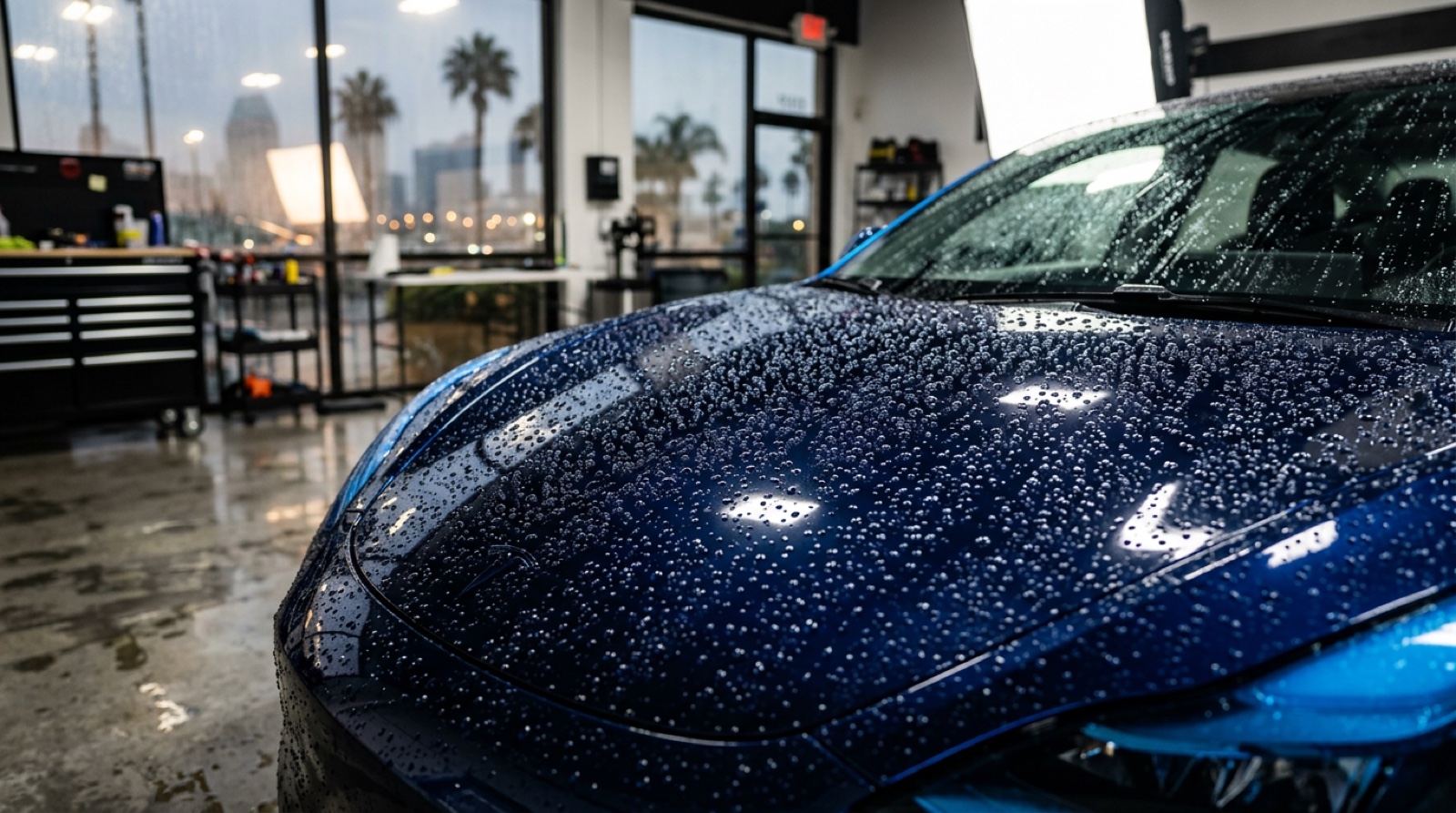
If you want paint protection on your vehicle before San Diego's rainy season, book it in August or September. Coating and film work needs dry conditions and controlled indoor time, and schedules tighten fast once the first real storm lands.
That timing matters more than usual this year. CalMatters reported on August 1 that the City of San Diego has convened an El Niño working group with members of every city department, planning for scenarios that range from canyon flooding to surf strong enough to chew up beaches and piers.
You can read the full CalMatters report on how San Diego is preparing for a winter of extreme weather. The city is planning around water. Your vehicle deserves the same thinking.
What a Wet Winter Actually Does to a Finish
Rain is not clean water. It picks up dust, pollen, and airborne particulate on the way down, then evaporates and leaves the minerals sitting on your clear coat.
Park in the sun after a light shower and those deposits bake into the surface. Left through several cycles, they etch, and etching is a correction job rather than a wash job.
The first storm is the worst storm
San Diego roads collect months of oil, rubber, and brake dust between meaningful rain events. The first downpour turns all of it into a slurry that gets thrown onto rocker panels, lower doors, and bumpers at freeway speed.
That mixture is abrasive and acidic. It is the single dirtiest hour your paint sees all year.
Runoff carries grit, not just water
Canyon and hillside runoff moves sand and small debris across roads in El Cajon, Santee, and the inland communities. Driving through it is closer to light sandblasting than to a rinse.
Why Protection Is a Wet Season Product
Most people think of coatings as sun protection. That is half the story.
A professionally applied ceramic coating creates a slick, hydrophobic surface that sheets water off instead of letting it pool and dry in place. Fewer standing droplets means fewer mineral spots and far less scrubbing.
For impact, paint protection film is the answer. Film absorbs the rock chips and grit strikes that wet roads throw at your front end, and quality film self heals light marring with heat.
| Winter threat | What it hits | What actually helps |
|---|---|---|
| Mineral spotting from rain | Hood, roof, trunk, glass | Ceramic coating plus prompt rinsing |
| Road slurry and grit | Rockers, lower doors, bumpers | Paint protection film on impact zones |
| Salt air and sea spray | Trim, fasteners, wheel wells | Regular decontamination washes |
| Standing water at panel gaps | Wrap edges and seams | Edge inspection before the rain starts |
A Realistic Prep Timeline
You do not need to do everything at once. You do need to sequence it correctly, because prep work has to happen before protection goes on.
| Window | What to schedule |
|---|---|
| August | Decontamination wash, paint inspection, correction if needed |
| September | Film on high impact panels, coating application, cure time |
| October | Wrap edge and seam check, window seal review |
| November onward | Maintenance washes after each storm cycle |
Correction is the step people skip. Sealing existing swirls and water spots under a coating locks the damage in for years, which is why a proper detail and paint decontamination comes first.
If Your Vehicle Is Already Wrapped
Vinyl handles rain well. Edges are where problems start.
Water works into any spot where the film has begun to lift, usually around door handles, mirror caps, and bumper returns. Once moisture sits behind an edge, the lift spreads.
Have a shop check the seams on your wrap installation before the season turns. A small edge reseal in September is a routine visit. The same edge in February can mean re-wrapping a panel.
Also change how you wash. Keep pressure washer nozzles away from seams and stay at least a foot back at moderate pressure.
Fleet Vehicles Have Less Room for Error
A wrapped work van in Chula Vista or National City is out earning every day of a wet winter. It also picks up double the road grime of a commuter car.
Faded or lifting graphics read as a business that stopped paying attention. Getting fleet graphics inspected and protected before storm season keeps vehicles on the road instead of parked for repairs during your busiest months.
What to Do the Week It Actually Rains
Rinse the vehicle within a day or two of a storm, especially the lower third. That is where the slurry lands and sits.
Skip the drive through brushes. They drag the same grit across your paint that you are trying to remove.
Dry with clean microfiber rather than letting the sun do it. On a coated vehicle this takes a few minutes because most of the water has already sheeted off.
Book the Work While the Weather Cooperates
Film and coatings need a clean, dry, temperature controlled environment and time to cure. Late summer in San Diego gives you both.
If you want your vehicle protected before the season turns, get in touch for a quote or call us at (619) 760-2961. We work with drivers across San Diego, La Mesa, Santee, El Cajon, Chula Vista, and National City.