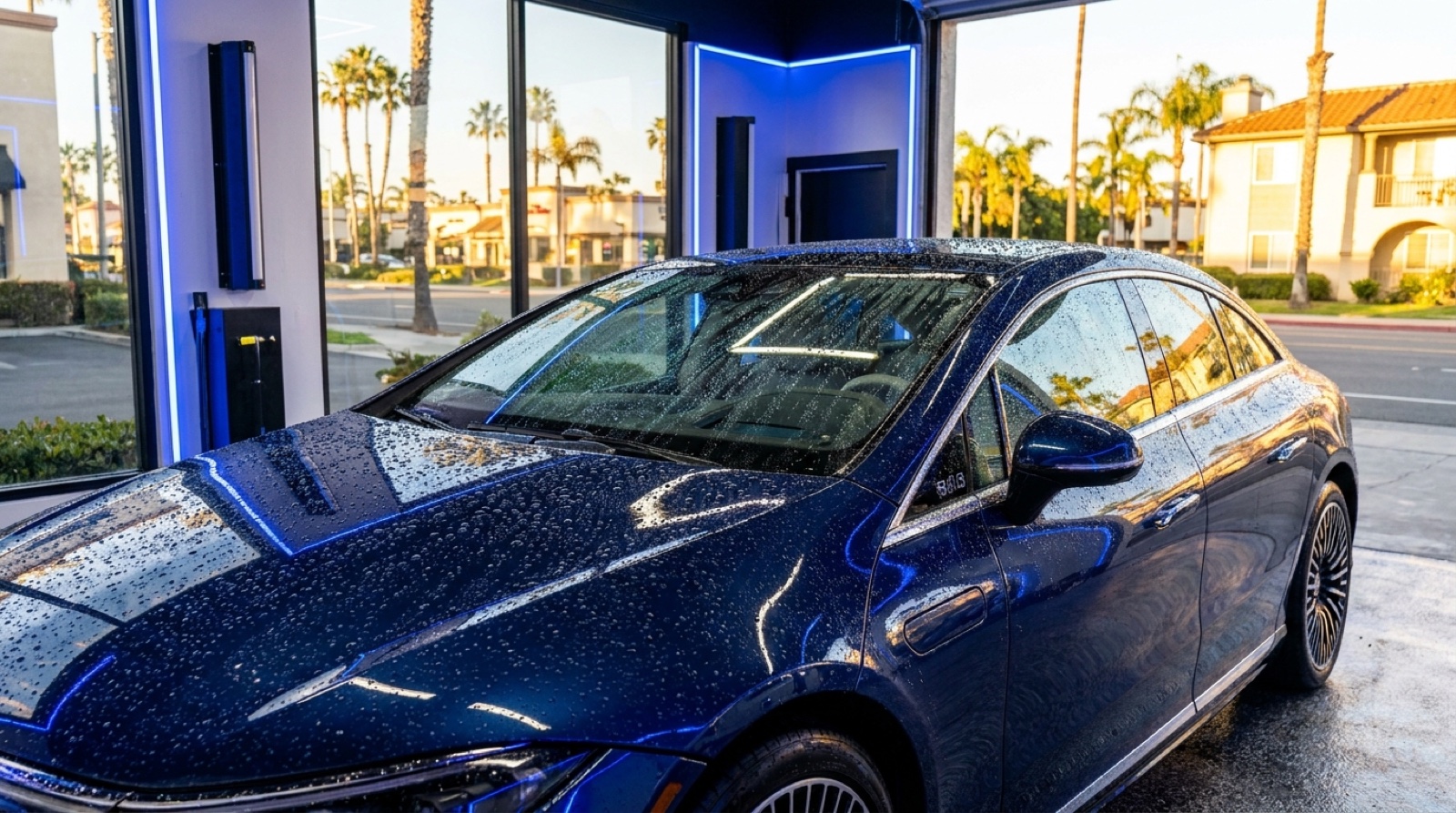
Hotter days and a rising wildfire risk both attack your paint, and the two forces work together.
Intense sun bakes the clear coat while airborne ash settles on hot panels and etches in. Protecting a finish in San Diego is easier before that damage starts than after.
The New York Times reported on July 15, 2026 that a shift in California weather is bringing a risk of unhealthy heat and wildfires. You can read the original report on the weather shift for the full picture.
Why Heat and Wildfire Season Are Hard on Paint
Ultraviolet light is the slow problem. Months of strong sun oxidize the clear coat, dull the color, and fade trim.
Wildfire ash is the fast problem. It is slightly alkaline and abrasive, so when it lands on a warm panel and then gets wiped off dry, it can leave fine scratches and etch marks.
Smoke adds a sticky film that bonds to the surface. Left in place through a heat wave, it becomes far harder to remove without polishing.
The main threats to a finish in summer
- UV oxidation that fades and chalks the clear coat over time.
- Ash and soot that scratch when wiped off dry.
- Smoke film that bonds to hot paint and traps contaminants.
- Tree sap and bird droppings that etch faster in high heat.
How the Protection Options Compare
Different layers solve different parts of the problem. Most drivers combine two of them rather than relying on one.
| Option | Best at | Typical lifespan |
|---|---|---|
| Ceramic coating | UV resistance, easier cleaning, gloss | 2 to 5 years |
| Paint protection film | Physical impact, rock chips, etching | 7 to 10 years |
| Window tint | Cabin heat and interior fade | Long term |
| Regular detailing | Removing ash and contaminants safely | Ongoing |
Ceramic Coating for the UV Problem
A ceramic coating bonds to the clear coat and adds a hard, slick layer. That layer shrugs off UV better than bare paint and makes ash and dust much easier to rinse away.
The slickness matters during fire season. When contaminants sit on a coated surface, they release with a gentle wash instead of demanding pressure that risks scratching.
For most San Diego daily drivers parked outside, a professional ceramic coating is the highest value first step. It cuts the effort of keeping the car clean while defending the color through the hottest months.
Paint Protection Film for Impact and Etching
Coatings resist chemicals and UV, but they do not stop a rock or absorb an impact. That is where film earns its place.
A layer of clear paint protection film takes the hits on the front bumper, hood, and mirrors. Many modern films are also self healing, so light marring from wiping off ash lifts out with heat from the sun.
Drivers who commute on I-8, I-15, or the 805 see the most benefit up front, since highway debris and summer road grit do real damage over a season.
Which panels to cover first
- Full front end, including bumper, hood, and mirrors.
- Rocker panels and lower doors that catch road spray.
- Headlights and the leading edge of the roof on taller vehicles.
Do Not Forget the Cabin and the Wash
Heat does not stop at the paint. Sun through glass fades seats and cracks dashboards over time.
Quality window tint blocks a large share of heat and UV, which keeps the interior cooler and slows fading. It also makes the car more comfortable on triple digit afternoons inland toward El Cajon and Santee.
How you wash matters just as much during fire season. Wiping a dusty, ash covered car with a dry towel is the fastest way to scratch it.
A proper hand wash and detail removes ash and smoke film safely and resets the surface. If you drive a wrapped vehicle, the same care protects the vinyl, and our wrap work holds up far better when it is kept clean.
A Simple Summer Plan for San Diego Drivers
You do not need every service at once. Match the protection to how and where you park.
- Parked outside daily: ceramic coating plus tint.
- Newer or high value car: add film on the front end.
- Already protected: book a maintenance detail after heavy ash days.
The Times of San Diego and other outlets have tracked how fire and heat risk is climbing across the state, so the practical move is to protect the finish before the worst stretch arrives.
If you are not sure which layer fits your car and budget, reach out for a quote and we will walk through the options for your vehicle. It takes a few minutes and saves a lot of correction work later.